Building a reusable training plan library with AI that syncs
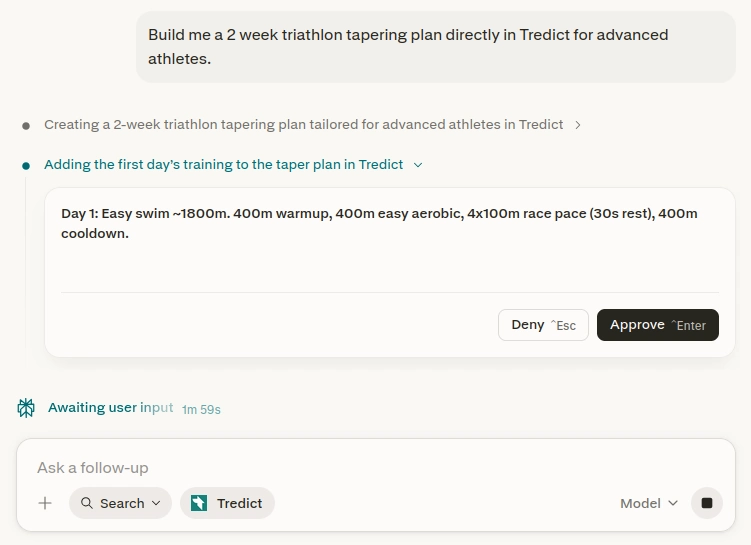
Creating a training plan from scratch for every athlete is slow. Most endurance coaches work from a library of plan templates they have built over time, adapting them to individual athletes rather than starting over each time.
The Tredict MCP Server makes it possible to build that library with an AI assistant, and to do it significantly faster than by hand.
What the AI actually does
Building a structured training plan by hand is time-consuming in any platform. Each workout needs its intervals, targets, durations and progressions defined individually. For a twelve-week block with four sessions per week, that is 48 workouts with potentially hundreds of individual intervals.
An AI assistant connected to the Tredict MCP Server can do that work. You describe the plan you want in plain language. The type, the target group, the weekly structure, the progression across weeks. The assistant analyses the parameters, builds the plan and writes it directly into Tredict, including each structured workout with its intervals and relative targets.
This works with any AI assistant that supports MCP. Claude, Perplexity or Gemini they all connect to the Tredict MCP Server and can create complete plans from a conversation. The process is the same regardless of which assistant you use. You describe the training block, the assistant builds it, the plan lands in Tredict ready to be applied.
Organising a library by type and level
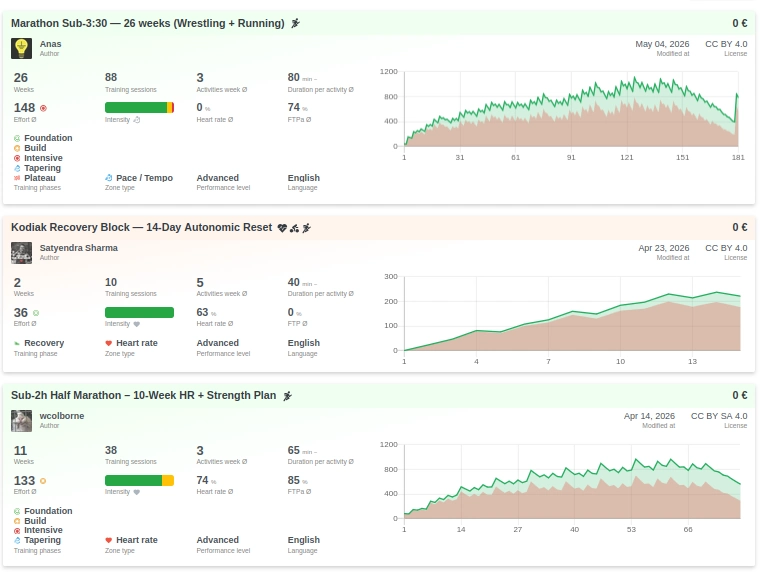
The practical approach is to build plans organised by type and difficulty. A coach working with runners and cyclists might build out something like this:
- Base building, beginner (running)
- 10k preparation, intermediate
- Half marathon, competitive
- Cycling FTP block, beginner
- Cycling FTP block, advanced
- Olympic triathlon, intermediate
Each plan lives in Tredict's reusable plan library. When a new athlete joins or a training cycle begins, the coach picks the appropriate plan and applies it to the athlete's calendar. Tredict handles the value translation.
The same plan can be applied to many athletes at once. A coach running a group programme pushes one plan to the entire group in a single step. Each athlete gets the correct absolute targets based on their own capacity values, while the structure remains identical across the group.
An AI assistant can help build out each of these plans systematically. You describe the training philosophy, the key sessions, the progression logic across weeks. The assistant constructs the plan and writes it into Tredict.
Relative values make plans reusable
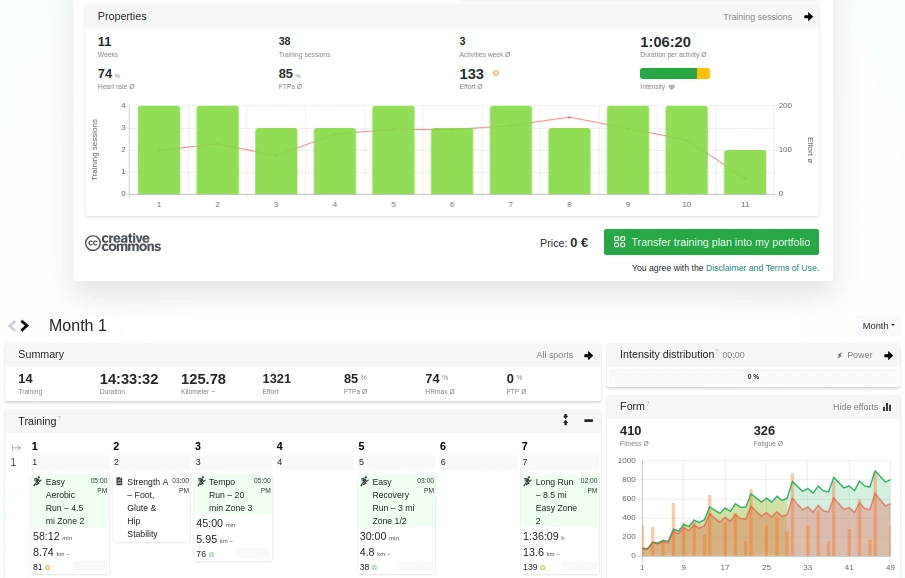
Plans in Tredict are built on relative intensity values. Instead of prescribing a fixed pace or watt target, workouts are defined as percentages of an athlete's capacity values. 65% of HRMax for an easy run, 85% of FTP for a threshold interval on the bike.
When a plan is applied to an athlete, Tredict translates those relative targets into the correct absolute values for that person. A plan built for a recreational runner applies correctly to a competitive one without manual adjustment. The structure and progression stay the same, the numbers adapt.
This is what makes a well-built plan genuinely reusable across athletes.
Refining plans after they have been used
Plans in the library are not fixed. After applying a plan and seeing how athletes respond in practice, you can adjust specific aspects. Change the intensity distribution in week three. Modify the long session structure. Add a recovery week pattern before the peak phase. You can update the plan in Tredict directly.
Over time the library becomes more refined, without requiring manual rebuilding each time something needs to change.
Not only for coaches
The obvious use case is endurance coaches who manage multiple athletes. The time saving on plan creation with the help of AI is significant, and the relative value system means plans actually transfer correctly between athletes.
It is also useful for self-coached athletes who want to prepare different training blocks for different parts of the season. A base block, a race preparation block, a recovery phase. All ready to apply when the time comes.
AI training plans on Garmin, Coros, Wahoo, Suunto and Apple Watch
A training plan only works if athletes can actually follow it during their sessions. Tredict is an official integration partner of Garmin, Coros, Wahoo and Suunto, and also syncs with Apple Watch. When a plan is applied to an athlete, the structured workouts sync automatically to their sports watch or bike computer.
The intervals, targets and workout steps that the AI assistant created land directly on the athlete's device. No re-entering workouts into Garmin Connect or the Coros app. No exporting and importing FIT files. The coach builds the plan with AI, applies it in Tredict, and athletes see their next session on their Garmin, Coros, Wahoo or Suunto watch ready to go.
For coaches managing a group, this scales. Apply one plan to twenty athletes, each gets the correct individual targets on their own device, regardless of whether they run with a Garmin Forerunner or a Coros Pace.
The Tredict coaches page has more on how the platform supports coaching workflows.
For setting up Perplexity with Tredict, the guide on using Perplexity's custom connector covers the process step by step.